

Why The Future of Nvidia's Leadership Is Under Scrutiny
As one of the leading companies in technology, Nvidia's leadership is crucial not just for its market performance, but also for the broader tech landscape. The alarming drop in CEO Jensen Huang's approval demonstrates a volatile environment where even the mightiest can fall. This uncertainty presents a rare opportunity to explore potential successors who could steer Nvidia through choppy waters. The actions taken by the board during this period of upheaval will undoubtedly have repercussions not just for the company itself but for the many sectors it influences.
Understanding the Current Landscape of Leadership
The rapid evolution in fields like AI and cloud computing highlights that leadership in tech isn't just about operational efficiency. It's also about resilience in the face of personal and corporate challenges. Huang's recent personal controversies have illuminated the need for stability in governance and strategic planning at Nvidia. Industries affected by Nvidia's decisions, including the emerging markets of machine learning and cybersecurity, are now watching closely to see how the situation unfolds. This scenario brings to light the vital connection between effective leadership and sustainable growth in technology-driven enterprises.
Potential Candidates Emerging
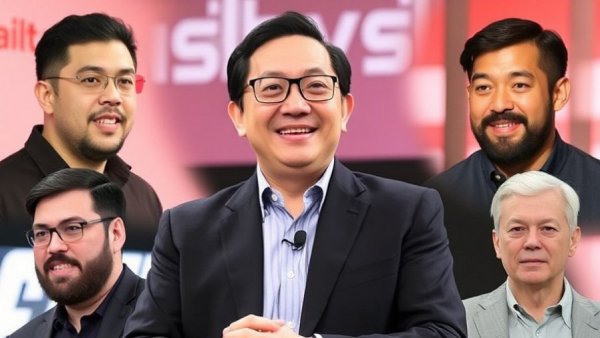
Naming successors becomes an intriguing parlor game, but analysts are seeking real contenders with the right mix of leadership skills and industry knowledge. Candidates like Lisa Su of AMD and Eric Schmidt, former Google CEO, offer differing perspectives and potential pathways for Nvidia's evolution. Schmidt brings a wealth of experience from diverse sectors like software and satellite technology, indicating that a jack-of-all-trades may be beneficial. Meanwhile, Su, as AMD’s CEO, has built her empire by enhancing her firm’s competitive edge, a skill that might be vital for Nvidia's future. Another potential candidate is Lip-Bu Tan, the current CEO of Intel, who is well-acquainted with the semiconductor industry and could provide valuable insights into Nvidia’s core operations.
Industry Response and Future Predictions
The board's decisions regarding Huang's succession will shape Nvidia’s trajectory in developing technologies such as artificial intelligence and the Internet of Things (IoT). A strong leader with an adept understanding of these evolving trends could propel Nvidia into new heights. As larger tech forces consolidate and evolve, Nvidia’s leadership must navigate a landscape marked by emerging trends in digital transformation. Backed by research and data, experts predict that a leader with a strong understanding of both technological and ethical considerations in AI could position Nvidia not just to recover but to thrive.
The Role of the Board and Governance Moving Forward
Crucially, the Nvidia board must not only think about who will replace Huang but also how to maintain corporate integrity during this transition. Given the scrutiny over potential candidates’ personal histories, including prior controversies like Schmidt's, the board's choice will require careful consideration of character, public perception, and industry needs. Furthermore, the board's governance practices must reflect a commitment to not only the shareholders but also to a broader ethical framework. Even as the dust settles, vigilance in governance will be key to maintaining investor confidence and fostering innovation. Strong leadership will require building trust within the organizational culture and with external stakeholders.
The Significance of This Transition
The implications of Huang's possible departure are significant. Nvidia has positioned itself as a leader in GPU technology, largely synonymous with the advancements in AI and machine learning. This reputation is not only tied to its products but to its leadership vision. Observers note that the next CEO must be adept at addressing both technical challenges and the public's concerns regarding data privacy and ethical AI usage. As new technologies emerge, the company's direction could either reinforce or dilute its market dominance, making the choice of new leadership even more critical.
Conclusion: Moving Forward in a Turbulent Time
As Nvidia navigates this uncertain future, the spotlight will intensify on the decisions made in its boardroom. With advancing technologies influencing the landscape, the capabilities of whoever leads Nvidia next will resonate across the tech industry. Keeping an eye on these developments will offer deeper insights into not just Nvidia's future but also the role technology will play in our daily lives. The ripple effects of this transition will reach far beyond Nvidia, possibly reshaping entire industries as they adapt to new leadership dynamics. This makes the unfolding situation not merely a corporate issue but a significant event in the broader tech narrative.




Write A Comment